
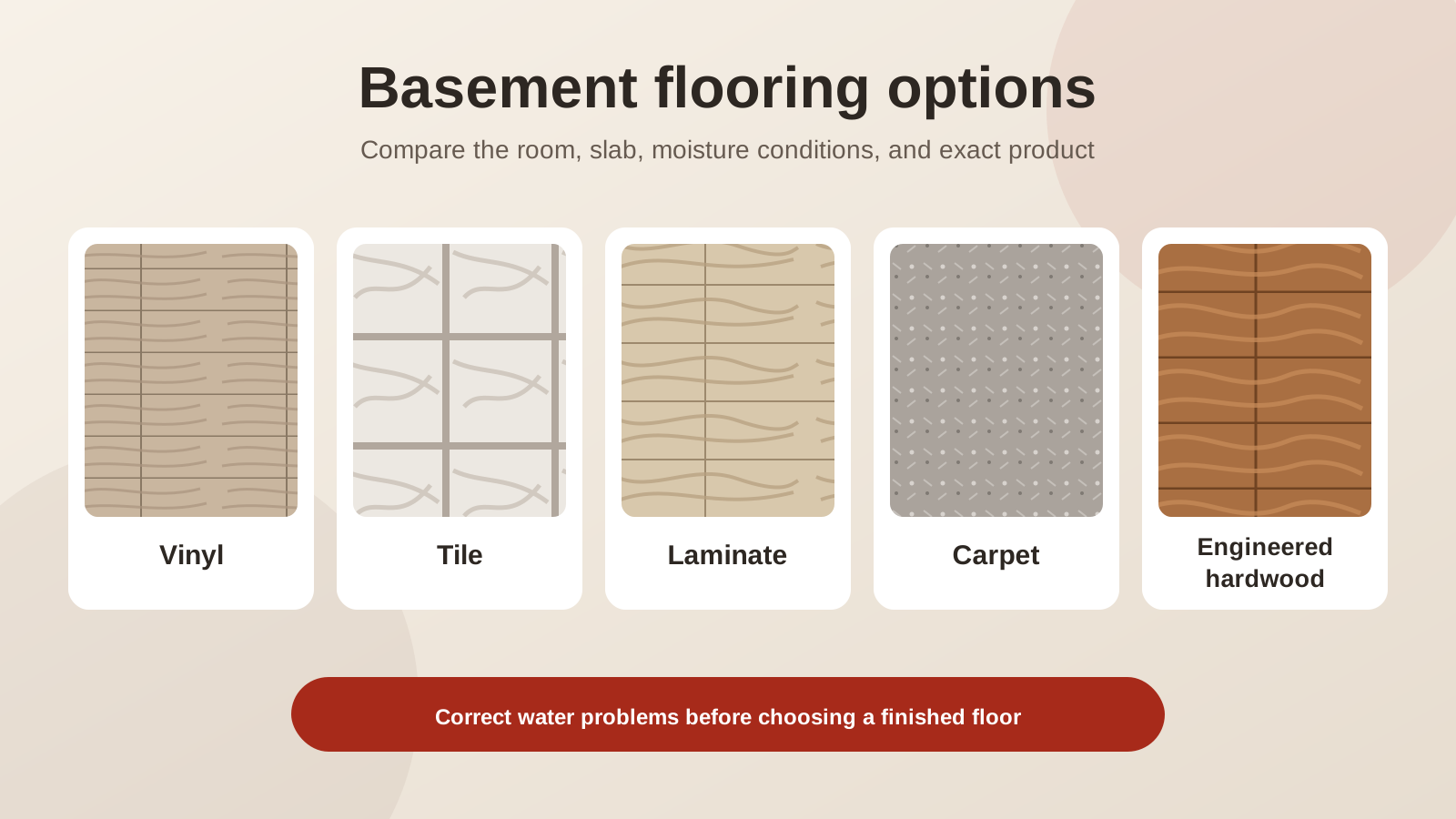
Vinyl and tile are often sensible starting points after a basement moisture assessment. Carpet can suit a warm, dry family room, while laminate or engineered hardwood should be considered only when the exact product is approved for below-grade use and the slab meets its installation limits.
Active leaks, dampness, mould, or sump and drainage problems need correction before any finished floor goes down. The best basement flooring is the product and installation system that fit the room and conditions beneath it.
Start with basement moisture
A finished floor can cover concrete. It cannot repair a water problem.
Natural Resources Canada advises homeowners to correct persistent leaks, spring or rain flooding, sump-pump problems, and sewer-backup issues before finishing a basement. Its basement assessment also lists staining, mould growth, peeling paint, efflorescence, surface deterioration, and a musty smell as signs of dampness.
The City of Mississauga's flood guidance tells homeowners to maintain drainage away from walls and keep sump pumps and floor-drain backflow devices working. Review the slab, cracks, plumbing, windows, and any place water appeared. Ask a qualified professional to assess active leakage, structural movement, or suspected mould.
Even a slab that looks dry may release moisture. Natural Resources Canada's guide explains that water can move through porous concrete by capillary action. The product manufacturer or installer may require a specific concrete moisture test before installation, so a quick home observation does not replace the required test.
Basement flooring options at a glance
Each flooring category contains products with different cores, backings, installation methods, and warranty limits. Use this table as a shortlist, then verify the exact item.
| Flooring category | Where it may fit | Checks before ordering |
|---|---|---|
| Vinyl | Recreation rooms, offices, entrances, and some laundry areas | Below-grade approval, slab limits, flatness, underlayment, seams, and water exclusions |
| Tile | Entrances, laundry areas, and spaces where a hard surface suits the room | Slab cracks, surface preparation, mortar, grout, temperature, and floor-drain access |
| Laminate | A consistently dry, finished office, bedroom, or family room | Below-grade approval, moisture limit, water-resistance definition, underlayment, and expansion space |
| Carpet | A dry family room, bedroom, or media room where warmth and sound control matter | Moisture history, approved pad and subfloor, cleaning access, and a plan for any water event |
| Engineered hardwood | A dry, climate-controlled basement when the exact system permits it | Written below-grade approval, slab test, installation method, humidity range, and warranty conditions |
The room label alone cannot make the decision. A laundry room with a floor drain has different needs from a dry home office, even when both sit on the same slab.
Vinyl flooring for a basement
Vinyl is often considered early because many products are made for floating or adhered installations over prepared concrete. Ultra Carpet & Flooring describes its current vinyl flooring options as moisture-resistant and suitable for busy areas.
That category description is a starting point. Ask whether the exact plank or tile is approved below grade and whether its warranty permits the room, slab, and installation method. A water-resistance or waterproof label covers only what the manufacturer defines. Water can still move through joints, around walls, or underneath a finished floor.
The slab must also meet the product's flatness and moisture limits. Confirm whether the system needs a separate underlayment, vapour-control layer, adhesive, or attached pad. More layers do not automatically improve the assembly. An unapproved combination can affect movement, sound, locking joints, or warranty coverage.
Tile for laundry areas and entrances
Tile can make sense where a hard, cleanable surface fits the room. Ultra carries tile options for homeowners comparing basement materials.
The visible tile is one part of the installation. The slab, crack treatment, mortar, grout, movement joints, and perimeter details all affect the finished floor. Existing cracks need assessment before they are covered. A floor drain, sump cover, cleanout, or appliance connection must remain accessible where the project requires it.
Comfort matters too. Tile over concrete can feel firm and cool, which may suit an entrance or laundry area better than a media room. Ask how the room will be heated, how often people will stand there, and whether a removable rug can add comfort without blocking required access.
Laminate in a dry finished basement
Laminate may suit a dry, climate-controlled basement when the selected product permits a below-grade concrete installation. Ultra's laminate flooring page presents it as a lower-maintenance way to achieve a wood, stone, or slate look.
Read the product documents closely. Water-resistant, waterproof, and approved below grade are separate statements. A product may handle small surface spills for a stated period while carrying different limits for moisture coming through a slab or water reaching plank edges.
Ask what moisture test is required, which underlayment is approved, and how much expansion space the installation needs. The answer should come from the current instructions for the exact product, rather than a rule borrowed from another laminate line.
Carpet in a dry family room or bedroom
Carpet changes how a basement feels. It can add softness, reduce reflected sound, and make a family room or bedroom more comfortable. Ultra's carpet styles include looped, textured, and patterned choices.
Moisture history is the deciding boundary. Natural Resources Canada notes that moisture can ruin carpets and encourage mould growth in building materials and finishes. Carpet and pad can also make it harder to see water beneath the surface after a leak.
For a basement that has remained dry, ask whether the carpet, pad, adhesive, and subfloor are approved for the slab and room. Also decide how the materials would be inspected, dried, cleaned, or removed after a plumbing or drainage incident. That practical plan belongs in the buying decision.
What about hardwood below grade?
Ultra offers both solid and engineered hardwood. Its current page describes engineered hardwood as less susceptible to movement from humidity and temperature changes than solid wood.
The National Wood Flooring Association installation guidelines reserve below-grade solid-wood use for products whose manufacturer recommends it and list engineered wood as eligible for below-grade installation. Product documents still control slab limits, installation method, humidity range, and water exclusions. If they do not permit the planned assembly, choose another product.
Real wood can be a strong design preference in a finished room. It also brings stricter moisture and climate requirements. Make that trade-off with the full installation guide in front of you.
Match the floor to the room
Start with what will happen in the basement every week.
- Family room or media room: Compare softness, footstep sound, furniture loads, cleaning, and moisture history. Carpet offers comfort in a dry room. Vinyl, laminate, or an approved engineered product can provide a hard surface.
- Laundry area: Review appliance connections, the floor drain, sump access, cleaning products, and the route water would take after a leak. Tile or an approved vinyl product may belong on the shortlist.
- Home office: Check rolling-chair loads, acoustics, cable routes, and comfort during long workdays. The product warranty should address the intended use and any protective mat requirements.
- Gym or playroom: Ask about equipment weight, impact, removable mats, spills, and cleaning. A floor covering and a separate protective surface may work better than asking one material to handle every activity.
- Basement entrance: Wet footwear and grit can concentrate wear in a small area. Compare a cleanable floor with a properly sized removable mat and a practical route for drying boots.
Questions to ask before ordering
Take this checklist to the showroom or consultation:
- Is this exact product approved for below-grade installation over my type of slab?
- Which moisture test does the manufacturer require, and what result must the slab meet?
- What preparation is needed for cracks, old adhesive, uneven areas, drains, or transitions?
- Does the system require an underlayment, subfloor, vapour-control layer, or specific adhesive?
- Which water events, room uses, and installation conditions does the warranty exclude?
- What indoor temperature or humidity range must be maintained before and after installation?
- How will doors, stairs, baseboards, appliances, and adjacent floors meet the new floor height?
- Who records the test results, product details, preparation, and approved installation method?
Keep the answers with the quote and product documents. If the product changes, repeat the checks for the replacement item.
Plan your basement floor with Ultra Carpet & Flooring
Bring rough measurements, room photos, the intended use, and any history of leaks or dampness when you compare options. Include the location of drains, sump equipment, laundry appliances, stairs, doors, and transitions.
Ultra Carpet & Flooring can help Mississauga homeowners compare vinyl, tile, laminate, carpet, and hardwood choices.
This article is a planning guide. The exact product instructions, moisture assessment, slab condition, complete installation system, and applicable project requirements control the final choice.
